
Try our easy to use Materials Calculator!
1) Enter your square footage 2) Select your options from the drop downs 3) Add to cart and checkout
1) Enter your square footage
2) Select your options from the drop downs
3) Add to cart and checkout
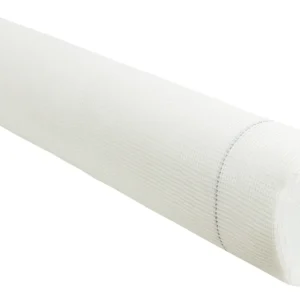

Every crack-free floor and wall starts with the layer underneath it. This category brings together the reinforcement, waterproofing and surface-prep materials that ready a substrate before your finish goes on, so the surface stays sound, bonded and crack-resistant for the life of the job. Reinforce and crack-isolate with alkali-resistant fiberglass mesh built for microtopping, microcement, plaster and stucco base coats, resin and epoxy floors, epoxy and traditional terrazzo, and overlays over existing ceramic tile, marble and natural stone. Bridge joints, seams and dissimilar substrates so movement does not telegraph through to the finish. Prime and anchor the build-up with the adhesion primers underneath it. From decorative microtopping to industrial floors, remodel-without-demo overlays to new construction, interior and exterior, these are the pro-grade materials contractors, flooring specialists and applicators work with every day. Pair any of them with the materials calculator to order the right quantity by square footage.
What this category covers
Alkali-Resistant Fiberglass Reinforcing Mesh
Alkali-resistant fiberglass mesh for crack-isolation and anti-fracture reinforcement across microtopping, microcement and chukum; plaster and stucco base coats; resin-bound, epoxy, polyurethane, polyaspartic, polyurea and MMA floors; epoxy and traditional terrazzo; and overlays over ceramic tile, marble and natural stone. The alkali-resistant coating survives the cementitious, high-pH environments that break down untreated mesh. Shop alkali-resistant fiberglass reinforcement mesh
Surface Prep and Adhesion Primers
Prime, bond and anchor before you coat. Eco Grip Quartz Primer is an acrylic adhesion primer reinforced with fine quartz for mechanical key on concrete, plaster and existing tile. Hydro Stop Grip Epoxy Primer is a two-component epoxy anchoring system for harder substrates and the jobs that need maximum bond. Surface prep is the difference between a finish that holds and one that delaminates. Shop primers
Wet-Area and Floor Sealers
Showers, wet rooms, balconies, terraces and pool surrounds need the finish sealed, not just applied. The anti-slip matte PU sealer and Armourcoat satin PU sealer close the surface against water and traffic. The pool interior sealer is built for permanent immersion. Shop floor and wet-area sealers
Built for the way pros actually work
- Decorative and resin flooring: microtopping, microcement, chukum, resin-bound, epoxy, polyurethane, polyaspartic, polyurea and MMA systems
- Terrazzo: epoxy terrazzo and traditional cementitious terrazzo
- Industrial floors: warehouses, distribution and manufacturing centers, parking decks, commercial kitchens, garages
- Tile and stone: crack-isolation and anti-fracture under ceramic tile, marble and natural stone; self-leveling floor systems
- Walls and facade: interior plaster, EIFS and ETICS, stucco and render base coats, exterior wall reinforcement
- Waterproofing: showers, wet rooms, balconies, terraces, decks, pool interiors
- Repair and overlay: crack bridging, cement-board patches, mixed-substrate reinforcement, remodel-without-demo overlays
Why surface prep and reinforcement matter
A floor or finish is only as durable as the layer beneath it. Skipping reinforcement, crack-isolation or proper priming is the most common reason a surface cracks, delaminates or fails in wet areas. Reinforcing mesh spreads stress across the coat instead of letting it concentrate into a crack. Mesh keeps substrate movement from telegraphing into the tile, stone or resin above. Primers give the coat something to hold onto, and sealers keep moisture from working back into the bond. Done right, prep is what lets you remodel without demolition and still get a surface that lasts. More on this in our guides to why microcement cracks and whether microtopping is waterproof.
How to choose
- Resin, epoxy or terrazzo floor? Embed alkali-resistant fiberglass mesh as crack-isolation and anti-fracture reinforcement in the build-up.
- Microtopping, microcement or plaster? Reinforce the base or leveling coat with the same mesh.
- Tile or stone over a questionable substrate? Use mesh to stop cracks transferring up into the finish.
- Coating over tile, porcelain or a dense substrate? Start with an adhesion primer so the system bonds.
- Wet area, shower, balcony or pool? Reinforce the coat, then seal it with a wet-area or pool sealer.
- Not sure on quantity? Use the materials calculator to order by square footage.
- Buying for a crew or a job book? See the trade program for professional pricing.
Frequently asked questions
Do you need mesh under microcement?
On a sound, stable substrate a thin decorative coat can go down without it. You need mesh wherever movement is likely: over existing tile, at substrate transitions, over cement board or plywood, across joints, and anywhere the base has hairline cracking already. Reinforcing the base coat costs a fraction of what it costs to strip and redo a cracked floor.
Can I use fiberglass mesh in epoxy or resin flooring?
Yes. Alkali-resistant fiberglass mesh is embedded in epoxy, polyurethane, polyaspartic and resin floor build-ups for crack-isolation and anti-fracture reinforcement.
Is this mesh right for epoxy terrazzo?
Yes. It is used as reinforcement in both epoxy and traditional cementitious terrazzo systems.
Does it work for microcement and microtopping?
Yes. Reinforce the base coat to prevent hairline and structural cracking in microcement, microtopping and chukum finishes.
Can it be used for crack-isolation under tile or stone?
Yes. It functions as anti-fracture reinforcement to keep substrate cracks from transferring into tile, marble or natural stone.
What goes on first, waterproofing or mesh?
Prep and prime the substrate, reinforce the coat, apply the finish, then seal it. Always confirm the order against the specific product instructions for your system.
How does it compare to other reinforcement meshes?
It is an alkali-resistant fiberglass mesh supplied in a 39 inch by 164 foot roll covering 538 square feet. The alkali-resistant coating is the specification that matters: untreated fiberglass degrades in the high-pH environment of a cementitious coat, which is why standard glass scrim fails where AR mesh holds. Coverage sits in the same class as the reinforcement scrims used in resin flooring and finishing systems, at a per-square-foot cost most of them do not match.