
Microcement vs Microtopping: The Complete Comparison Guide
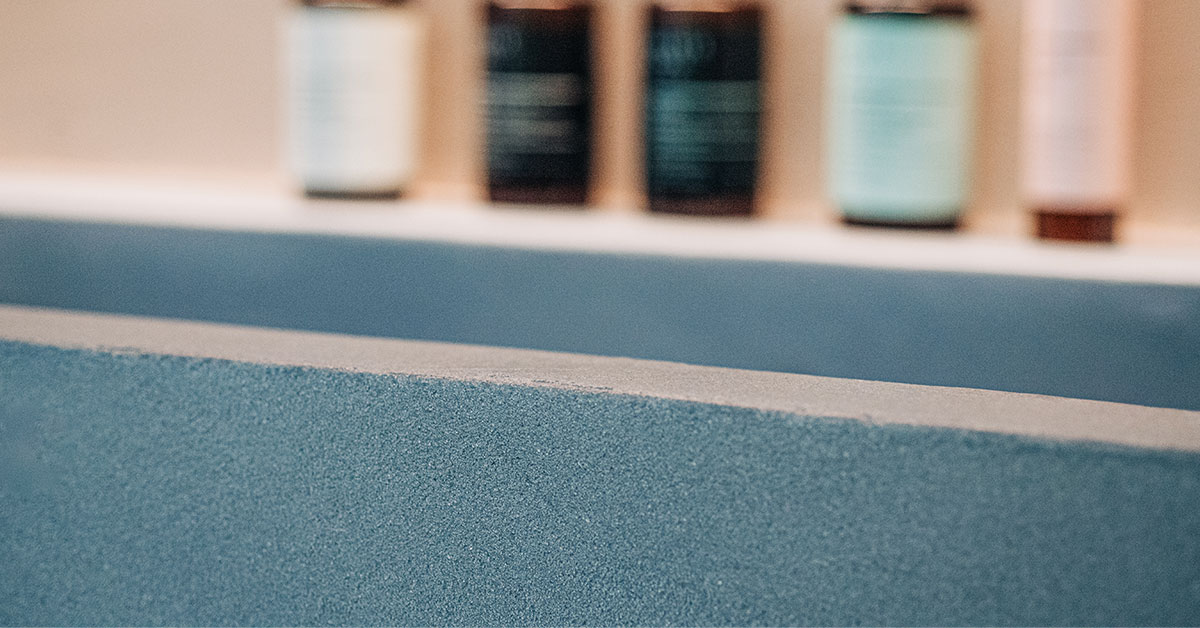
Are microcement and microtopping the same thing?
For practical purposes, yes. “Microtopping” is the name that took hold in the US decorative concrete trade, and one manufacturer even sells a product under the registered name Microtopping®. “Microcement” is the name many European brands use. In practice the two labels cover the same family of products, and the label alone tells you little about how a product will perform.
A typical cement-based product in this family combines Portland cement, a polymer (often acrylic), fine sand and pigment. It goes on in several thin coats, usually a few millimeters in total, so it can cover a surface without removing it. A sealer then sets the sheen and protects the surface from stains and wear.
Some manufacturers supply the material as one component, a powder or premixed paste that only needs water or pigment. Others supply it as two components, a powder and a liquid polymer that the installer mixes on site. These are packaging choices, and they do not change what the material is. The full background on the material is in what microtopping is.

What actually differs between products
Since the names overlap, it makes more sense to compare the things that do change how a surface performs. The binder matters most. A cement binder hardens by hydration, a chemical reaction with water, and it ends up rigid. A resin binder dries as the water leaves and stays slightly flexible after it cures.
That one difference shows up in several places on a real job:
Cement-based microcement or microtopping | Cement-free resin microtopping (TERRAZZO GraniTech) | |
Binder | Portland cement with a polymer additive | Natural granite aggregate in an acrylic resin, with no cement |
How it sets | Hydration, which leaves a rigid layer | Drying, which leaves a layer with some flexibility |
Mixing on site | Often powder plus liquid polymer or powder plus water | Premixed paste in a bucket. You add pigment and a measured amount of water |
Color while drying | Can shift as moisture evaporates and the cement hydrates | Designed to be more color-stable. A test panel is still recommended for critical colors |
Typical total thickness | A few millimeters, depending on the product | About 3 to 4 mm (roughly 1/8 inch) |
Water before sealing | Depends on the sealer for water resistance | Waterproof before sealing but not a waterproofing membrane |

Gloss level is often credited to the binder, but in both cases it mostly comes from the sealer. A matte, satin or gloss topcoat can be chosen for either type. Texture comes from the troweling technique and from the grade of the material, from very smooth to a finish with visible aggregate.
For most people, the look is the reason to consider either one. A seamless finish has no grout lines, so a room reads as one surface. The same material can also continue from the floor up the wall and onto a vanity or countertop. Color is added as pigment, which lets a single tone run through a whole space. That continuous, modern look is why many homeowners and designers compare these finishes with tile in the first place.
Preparation, installation and long-term care
Most failures in thin coatings trace back to the surface underneath them. Whatever the product, the substrate has to be sound, clean, flat and dry enough before anything goes on. On concrete, that usually means grinding to open the surface, repairing cracks, and testing for moisture, especially on basement slabs and slabs on grade.
A primer then controls absorption and gives the coating something to grip. In the TERRAZZO GraniTech system, that primer is Eco-Grip Quartz Primer, an acrylic primer with fine quartz that leaves a rough profile for mechanical anchoring. Where a floor also needs a vapor barrier, Hydro-Stop Grip Epoxy Primer goes down with 20/40 silica sand and fiberglass mesh first. The epoxy primer forms that barrier only in combination with the sand and mesh.
None of these coatings level a floor. They follow the shape of whatever is underneath, so dips and waves have to be corrected with a patch or leveling compound beforehand. Wood floors generally need a stable panel or cement board over them, and metal needs to be clad before it can be coated.
In showers and other wet rooms, the decorative layer is not the waterproofing. A membrane meeting ANSI A118.10 goes into the substrate first, and the finish goes on top of it. That distinction is the subject of waterproof microtopping.
Cracking is the problem people ask about most. With cement-based coatings, hairline cracks usually appear when the substrate moves more than the rigid layer can tolerate. They also follow existing cracks that were not treated before coating. A hairline crack in a coating this thin is normally repaired by recoating and resealing the area. The common causes and how to prevent them are in microcement cracking.
Day-to-day care is simple. A pH-neutral cleaner and a microfiber mop are enough for most sealed surfaces. The sealer wears over time, so it is renewed periodically, and how often depends on traffic, water exposure and cleaning products. That resealing step is part of owning any of these finishes.
Whether a homeowner can do the work alone depends on the size of the job and their experience with a trowel. Small, dry, flat areas are realistic for a careful DIYer who follows the manufacturer’s instructions closely. Showers, floors with moisture issues and large areas are better left to a trained installer because preparation mistakes are hard to fix later.
Microcement, microtopping or polished concrete: choosing for your project
Polished concrete is a different approach altogether. Instead of adding a layer, it grinds and densifies the existing slab. If you already have a slab in good condition and you like its natural character, polishing can be a sensible choice. You do have to accept the slab’s existing marks and joints.
A thin coating makes more sense when the existing surface is tile, drywall or a slab you do not want to show. It can run continuously across floors, walls and countertops, which polished concrete cannot do. It also usually avoids removing and disposing of the old surface, although preparation still takes time.
On floors, durability depends less on the product’s name and more on the sealer and the traffic it has to handle. A kitchen or hallway floor takes far more wear than a bathroom wall, so it usually gets a heavier sealer build and needs resealing sooner. Slip resistance matters as well, especially where floors get wet. In its product specifications, the TERRAZZO GraniTech system lists R11 slip resistance with footwear (DIN 51130) and Class B barefoot (DIN 51097).
For wet areas, look closely at how each system handles water and what it needs underneath. Our article on microcement bathroom pros and cons covers that decision in detail. For floors that will take heavy wear or chemicals, an industrial epoxy coating is a separate category worth comparing. We explain the differences in microtopping vs epoxy.
When you collect quotes, ask each installer to name the exact system, the primer and the sealer they plan to use. Two quotes for “microcement” can describe different materials with different preparation steps, and only the product names make them comparable.
Where a cement-free resin microtopping fits
We started applying cement-based systems in 2009. Nine years on job sites showed us where they tend to fail: hairline cracking, lap lines between passes, and trouble in wet areas. In 2018 we introduced TERRAZZO GraniTech, a patented, cement-free surface system made from natural granite and acrylic resin, to deal with those three problems. It is applied like a microtopping, in thin troweled coats, but it contains no cement.

Its patented anti-crack memory resin technology gives the cured finish a flexibility that rigid cement does not have. That lets it accommodate normal movement in the substrate, which is the most common cause of hairline cracks in cement-based plasters. It is crack-resistant when it is installed over a smooth, stable substrate. If the substrate cracks structurally or shifts beyond normal movement, no thin decorative finish can prevent that.
Because it is a single-component paste, there are no separate bags and liquids to batch. It has a long working time, it does not leave lap lines between passes, and an opened, resealed bucket stays usable for up to 12 months. With proper preparation, it installs over existing tile, drywall, cement board and concrete, often without demolition. Leaving the old surface in place shortens the schedule and keeps demolition debris and disposal out of the project.
The same system is used on walls, floors, ceilings, countertops, cabinetry, wet areas, pool decks and pool interiors, with the system components specified for each environment. Because it is UV-stable, it also works outdoors. The material is low-VOC and low in odor, and the exact values are on its safety data sheet.
If you are searching for a liquid terrazzo look, our Microterrazzo finish is the closest match. The natural black and beige aggregates are already mixed into the material. Because it is applied by trowel, you get the terrazzo look without pouring a slab. Fine and Medium are the system’s other two core finishes.
Projects are completed by trained installers in our network, and our 3-day seminars teach the preparation, detailing and sealer recommendations the system depends on. Workmanship warranties come from the installer. Why TERRAZZO GraniTech explains how the system performs in more detail.
Frequently asked questions
Can microtopping be applied over existing slabs without removal?
Yes, if the slab is sound, flat and dry enough and it has been ground, repaired and primed first. A slab with moisture problems needs a vapor barrier before any thin coating goes on.
What is the difference between microtopping and a traditional concrete topping?
A traditional concrete topping is a thicker layer meant to rebuild or level a slab. A microtopping is a decorative skim coat a few millimeters thick that relies on the surface underneath already being flat and sound.
How much do microcement floors cost?
The price depends mainly on the condition of the substrate, the preparation it needs, the number of coats, the sealer and local labor rates. Ask for an itemized quote that names each part of the system. For TERRAZZO GraniTech, material kits are listed in our shop, and the materials calculator estimates the quantities for your specific area.
What are the disadvantages of microcement?
The main ones are hairline cracking when the substrate moves, color that can shift as the cement dries, and lap lines if the coats are not applied skillfully. The pros and cons of microtopping are covered in a separate guide.
What are some alternatives to microcement?
The usual alternatives are polished concrete, epoxy floor coatings, tile, and cement-free resin microtoppings such as TERRAZZO GraniTech.
Can I make my own microcement?
It is not a good idea. Commercial systems are designed so that the primer, the coating and the sealer work together, and a homemade mix does not have that tested compatibility.
How long does microtopping last?
There is no reliable single figure because the lifespan depends on the preparation, the traffic, water exposure and the sealer. Most of the upkeep is the sealer itself. Renewing it before it wears through is what protects the surface underneath.